Workshop
Workshop on Green Software and Sustainable Computing -
GSSC
2027
19 - 21 July, 2027 - Rome, Italy
In conjunction with the 22nd International Conference on Software Technologies - ICSOFT 2027
CO-CHAIRS
|
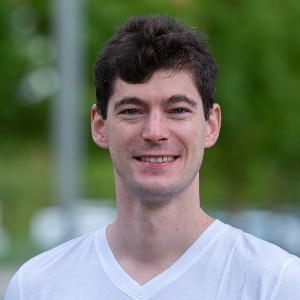
Benjamin Weder
envite consulting GmbH
Germany
|
|
|
|
Short Bio
Benjamin Weder received his PhD degree in Computer Science at the University of Stuttgart in 2024. The focus of his research is the development of concepts for improving the sustainability of software development and operations, as well as quantum software engineering. In this context, he worked on pattern languages for quantum computing and green computing. Dr. Weder is actively participating in various Program Committees, e.g., Quantics, SOSE, and QSW, and is an experienced workshop chair. Currently, he works as a green BPM consultant at envite consulting GmbH and implements real-world applications and optimizes the sustainability of business processes using state-of-the-art green-computing concepts.
|
|
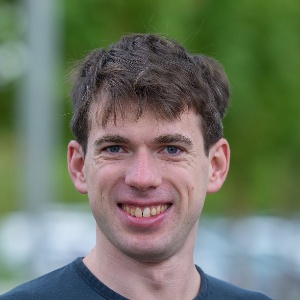
Martin Beisel
envite consulting GmbH
Germany
|
|
|
|
Short Bio
Martin Beisel received a PhD degree in Computer Science from the University of Stuttgart in 2025. His research interests include designing and realizing sustainable software applications, quantum computing, as well as the authoring and use of design patterns. Dr. Beisel received multiple best paper awards, including ICWE and IQSOFT. Currently, he works as a green BPM consultant at envite consulting GmbH, realizing efficient real-world applications and supporting customers in achieving their sustainability goals within their IT departments.
|

|
Uwe Breitenbücher
Reutlingen University
Germany
|
|
|
|
Short Bio
Prof. Dr. Uwe Breitenbücher is a German computer scientist and Professor of System Architecture at Reutlingen University. He earned his Ph.D. in 2016 from the University of Stuttgart, where his doctoral dissertation focused on pattern-based methods for cloud and application management automation. His current research interests lie at the intersection of enterprise system architecture, cloud computing, deployment automation, the Internet of Things (IoT), and AI.
|
SCOPE
The growing energy and resource demands of software systems, driven by increasingly complex applications, larger data centers, and emerging technologies such as AI, make sustainability a pressing concern for the software engineering community. The Workshop on Green Software and Sustainable Computing addresses the challenges of designing, developing, operating, and evaluating software with sustainability as a first-class citizen. It brings together researchers and practitioners to discuss conceptual foundations, engineering practices, and evaluation methods that support environmentally sustainable software throughout its lifecycle, as well as the opportunities and challenges that emerging technologies bring to this space. Thereby, preliminary research results and emerging ideas can be improved upon, paving the way for new breakthroughs in the domain of sustainable computing.
TOPICS OF INTEREST
Topics of interest include, but are not limited to:
AREA 1: CONCEPTS FOR DESIGNING, DEVELOPING, AND OPERATING GREEN SOFTWARE
- Reference Architectures for Sustainable Software
- Best Practices and Patterns for Green Computing
- Deployment Strategies for Sustainable Software
- Process-Oriented Sustainability Approaches
- Carbon-Aware Scheduling Approaches
AREA 2: METHODS AND METRICS FOR DETERMINING THE SUSTAINABILITY OF SOFTWARE
- Novel Metrics to Assess Software Sustainability
- Tooling Support for Analyzing Sustainability
- Case Studies Evaluating the Sustainability of Software
AREA 3: GREEN SOFTWARE DEVELOPMENT LIFECYCLE
- Frameworks for Sustainable Lifecycle Management
- Experience Reports from Applying Sustainability Concepts in the Industry
- Agile Methods for Green Software
AREA 4: USING EMERGING TECHNOLOGIES FOR SUSTAINABLE COMPUTING
- Quantum Computing
- Artificial Intelligence
- IoT
- Cloud, Fog, and Edge Computing
IMPORTANT DATES
Paper Submission:
May 13, 2027
Authors Notification:
June 2, 2027
Camera Ready and Registration:
June 11, 2027
WORKSHOP PROGRAM COMMITTEE
Available soon.
PAPER SUBMISSION
Prospective authors are invited to submit papers in any of the topics listed above.
Instructions for preparing the manuscript (in Word and Latex formats) are available at: Paper Templates
Please also check the Guidelines.
Papers must be submitted electronically via the web-based submission system using the appropriated button on this page.
PUBLICATIONS
After thorough reviewing by the workshop program committee, all accepted papers will be published in the workshop proceedings book, under an ISBN reference and on digital support.
All papers presented at the conference venue will be available at the SCITEPRESS Digital Library (http://www.scitepress.org/DigitalLibrary/).
SCITEPRESS is a member of CrossRef (http://www.crossref.org/) and every paper is given a DOI (Digital Object Identifier).